The Blogtastic Blog
Notes on running AI content without wrecking your site: what Google actually allows, what ranks, and what we learn running Blogtastic on itself.
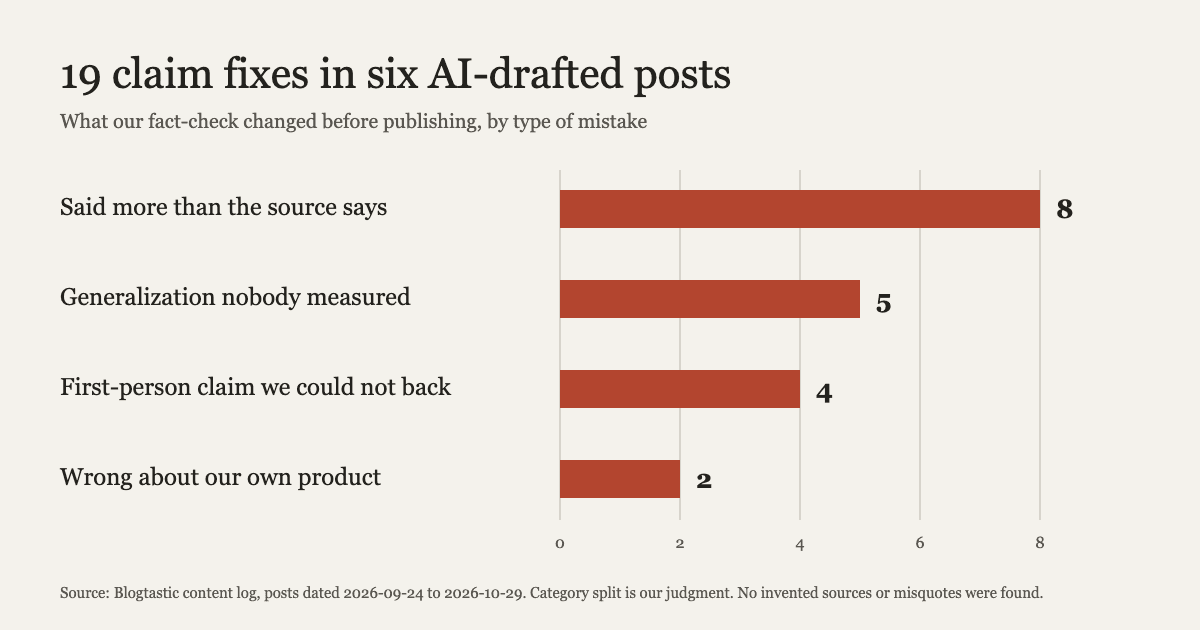
What Our Fact-Check Caught in Six AI-Drafted Blog Posts
We logged every correction made to six AI-drafted posts on this blog before they went live. 19 claims had to be fixed, and none of them was an invented source. Most said more than their source did. Here is the tally, plus the two errors that got through anyway.
November 5, 2026
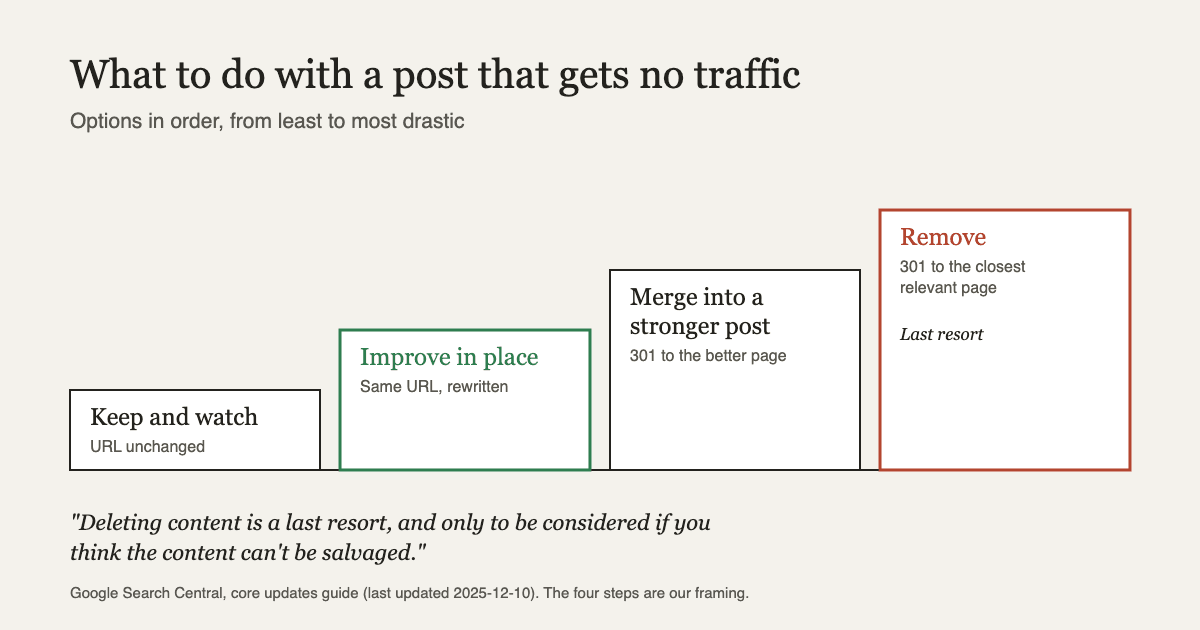
Should You Delete AI Blog Posts That Get No Traffic?
Google calls deleting content a last resort. Most automated posts that get no traffic should be improved or merged into a stronger post first. Here is how to decide, what status a removed URL should return, and what our own delete button does and does not do.
October 29, 2026
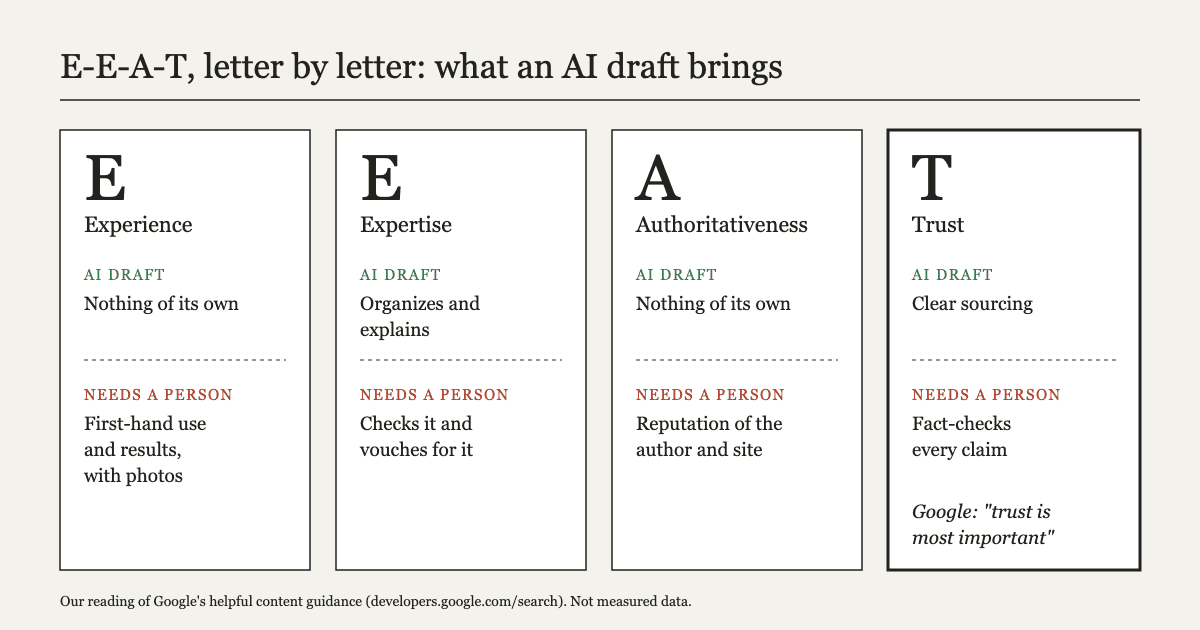
AI Content and E-E-A-T: What a Draft Can Supply and What Only You Can
Google applies the same E-E-A-T standard to AI-assisted content as to anything else. A model can help with accuracy and structure, but it has no experience of its own and it cannot be your author. Here is how to fill those gaps honestly, including the byline gaps in our own product.
October 23, 2026
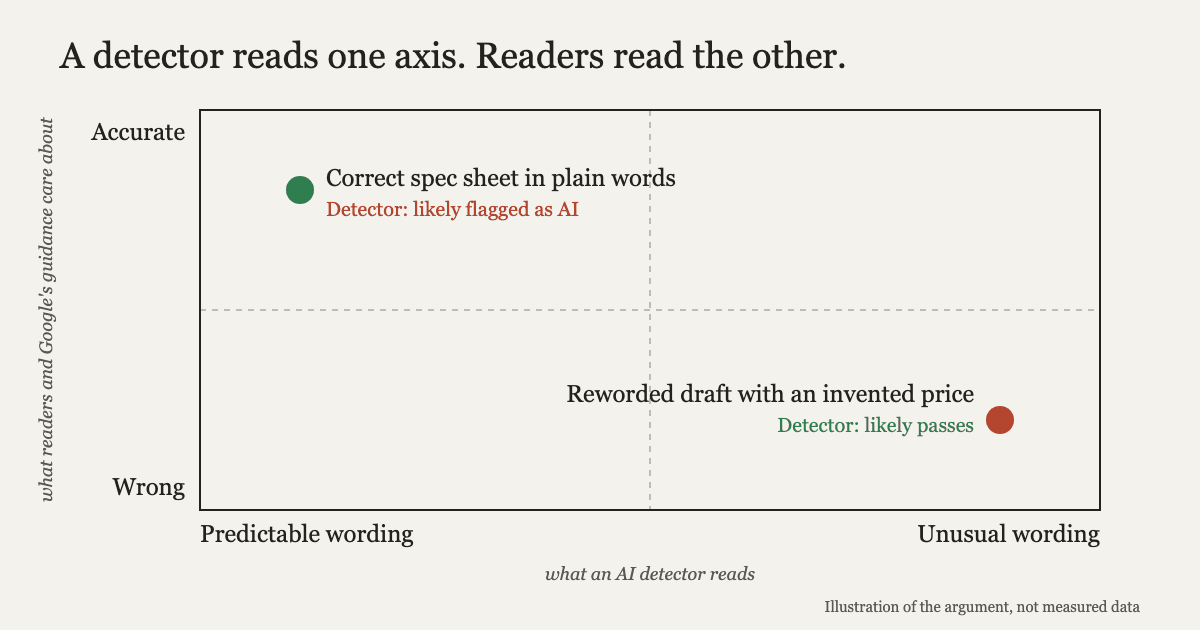
Do AI Content Detectors Matter for SEO?
Not as a ranking factor you can measure. Google's documentation describes judging content by usefulness and spam patterns, not by a detector score, and published tests show detectors misread plain human writing. Here is the evidence and what to check instead.
October 16, 2026
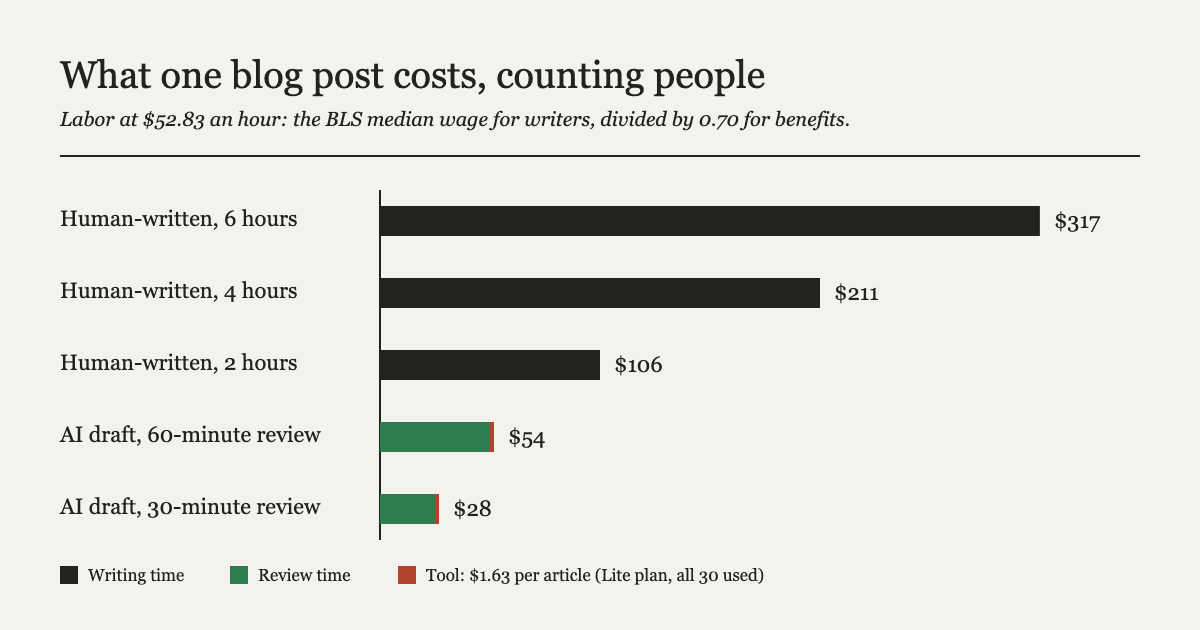
How Much Does a Blog Post Cost? Human vs AI-Assisted, With the Math
A human-written post costs about $211 at four hours of median writer pay. An AI-assisted post costs about $28, and almost all of that is the person reviewing it. Here is the arithmetic, including where our own homepage comparison falls short.
October 8, 2026
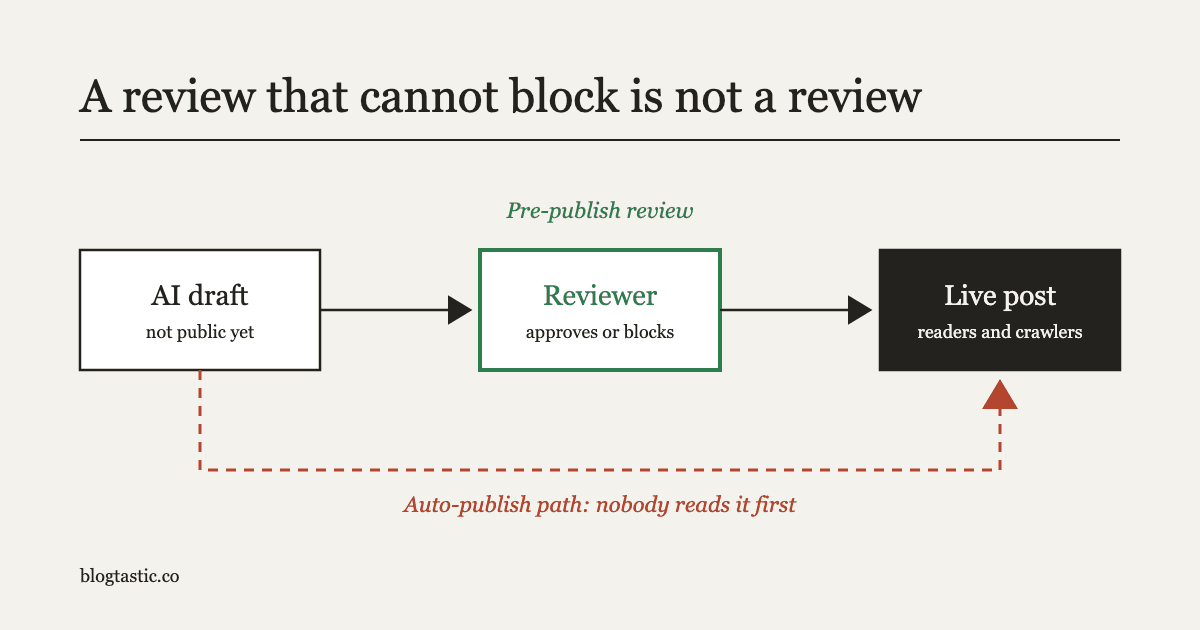
How to Add Human Review to an AI Content Workflow
Human review only counts if it happens before publishing and the reviewer can block the article. Here is what to check, how many hours it costs at each publishing volume, and where our own product publishes without that gate.
October 1, 2026
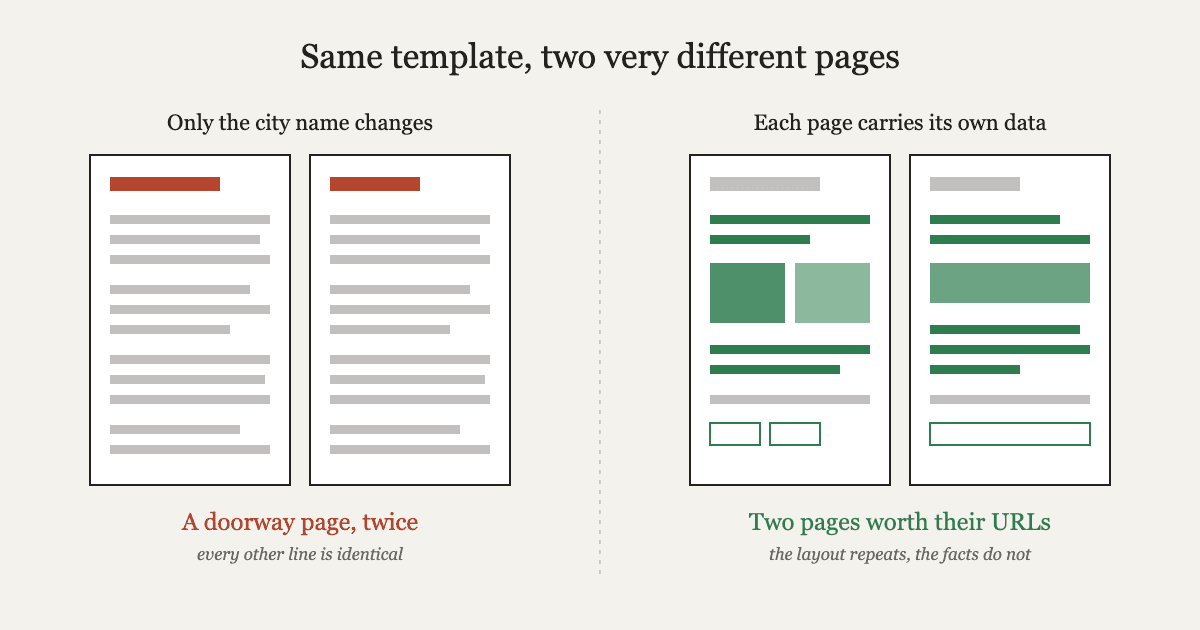
Programmatic SEO vs Spam: Where Google Actually Draws the Line
Programmatic SEO is not spam by definition. It becomes spam when the pages differ only by the keyword swapped into a template. Here is a test you can run on your own pages in ten minutes, mapped to the Google policies it protects you from.
September 24, 2026
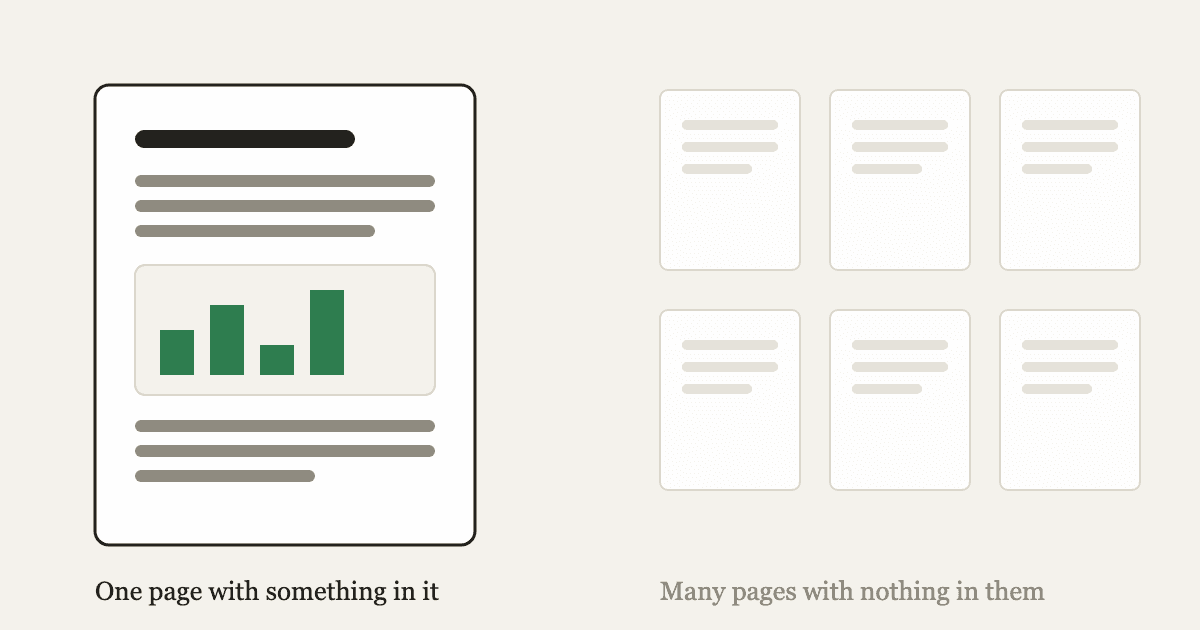
Does Google Penalize AI-Generated Content? What the Policies Actually Say
Google does not penalize content for being AI-generated. It penalizes content generated at scale without value. The difference is specific, documented, and easy to get wrong.
September 22, 2026