Does Google Penalize AI-Generated Content? What the Policies Actually Say
Google does not penalize content for being AI-generated. It penalizes content generated at scale without value. The difference is specific, documented, and easy to get wrong.
Blogtastic Team · September 22, 2026
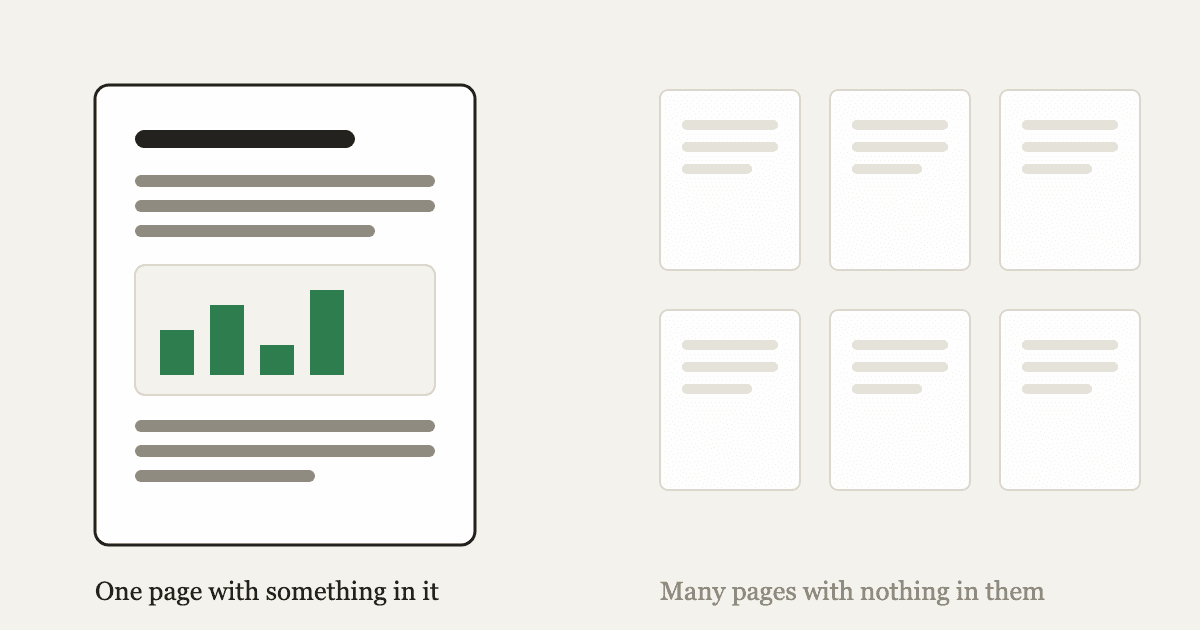
Short answer: no, Google does not penalize content for being AI-generated. Google penalizes content that is produced, by any method, primarily to manipulate rankings instead of helping users. The method was never the crime. The laziness is.
That distinction sounds like a technicality until you read the actual policies. Then it becomes an operating manual. We sell AI blog automation, so we have every incentive to tell you AI content is risk-free. It is not. Here is the honest version, with Google's own words.
What Google actually says
Google's guidance on AI-generated content has been consistent since 2023: appropriate use of AI or automation is not against its guidelines, and its ranking systems aim to reward quality content "however it is produced." The current documentation on generative AI content says the focus should be on "accuracy, quality, and relevance, especially when automatically generating content," and that this standard applies to metadata too: titles, meta descriptions, structured data, image alt text.
So the production method is neutral. What is not neutral is the pattern of output.
What actually gets sites penalized
The policy that catches AI content sites is scaled content abuse: "when many pages are generated for the primary purpose of manipulating search rankings and not helping users." Google's own examples include:
- "Using generative AI tools or other similar tools to generate many pages without adding value for users"
- Scraping and republishing content through "automated transformations like synonymizing, translating, or other obfuscation techniques"
- Pages that make "little or no sense to a reader but contain search keywords"
Notice what all three have in common: scale without substance. One mediocre AI article will not tank your site. Five hundred interchangeable ones can, because at that volume the pattern itself becomes the signal. Templated comparison pages for every possible matchup, a glossary entry for every keyword, a listicle for every category: these footprints are detectable precisely because thousands of sites generate them the same way with the same tools.
The test that predicts whether your content is safe
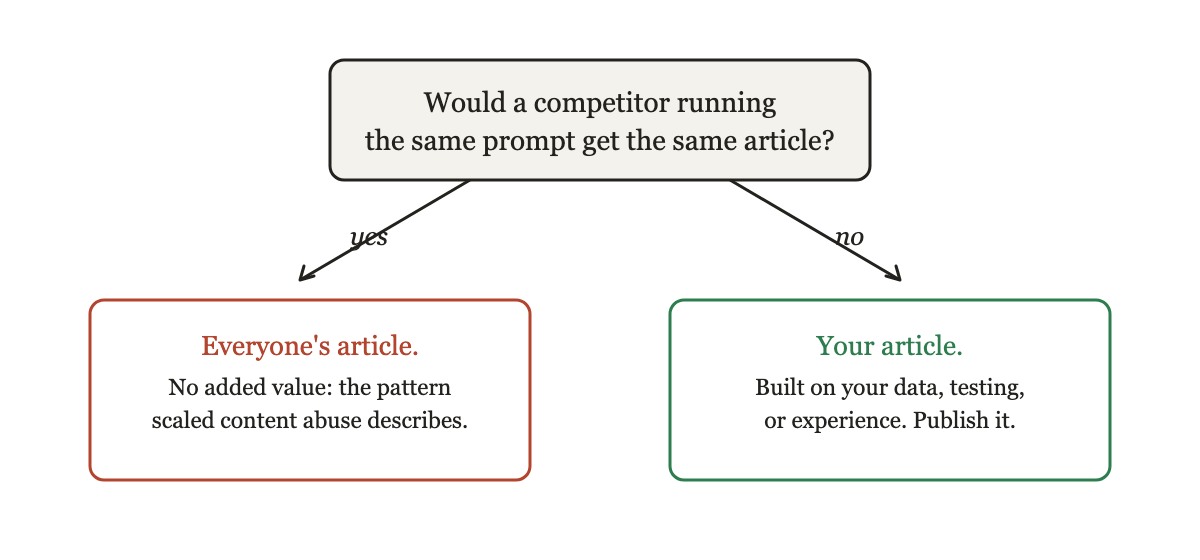
Before publishing any automated article, ask one question: if a competitor ran the same prompt, would they get essentially the same article?
If yes, the article adds nothing to the web and it is exactly what the scaled content abuse policy describes. If no, because the article contains your data, your experience, your testing, or your genuinely distinct point of view, you are on the right side of the policy regardless of how much AI touched it.
Google's documentation points the same direction: it describes AI as working well "when researching a topic, and to add structure to original content." The value has to come from somewhere. AI can shape it, format it, and scale it. It cannot invent it.
How to automate blogging without getting burned
What we tell our own customers, and what we practice on this blog:
1. Keep a human in the loop. Every generated article needs a review pass for factual accuracy before it goes live. Not a skim. A review that checks names, numbers, and claims. Automation that skips this step eventually publishes something wrong enough to hurt you with readers before Google ever notices.
2. Feed the machine your substance. Product data, customer questions, real results, opinions you actually hold. An AI article built on your inputs is yours. An AI article built on nothing is everyone's.
3. Cap volume at your review capacity. Publishing 90 articles a month you cannot review is worse than publishing 8 you can. Our plans have article limits partly for this reason.
4. Stay on topic. Publishing content unrelated to what your site is about is its own spam pattern. A pet store blog about cryptocurrency is a red flag to Google and to everyone else.
5. Disclose when it helps the reader. Google recommends that "sharing information about how a piece of content was created can help give your readers more context." We agree, and we do it below.
Where Blogtastic stands
We built Blogtastic for the boring middle ground the policies actually reward: automated drafting and publishing, grounded in your business context, with review checkpoints instead of a firehose. That is also how this blog operates. Every post here is drafted with AI, fact-checked against primary sources, and reviewed by a person before publishing. This one cites Google's documentation directly so you can check every claim yourself.
If you want the same setup for your own site, see how it works or start with a couple of trial articles and judge the output for yourself.